
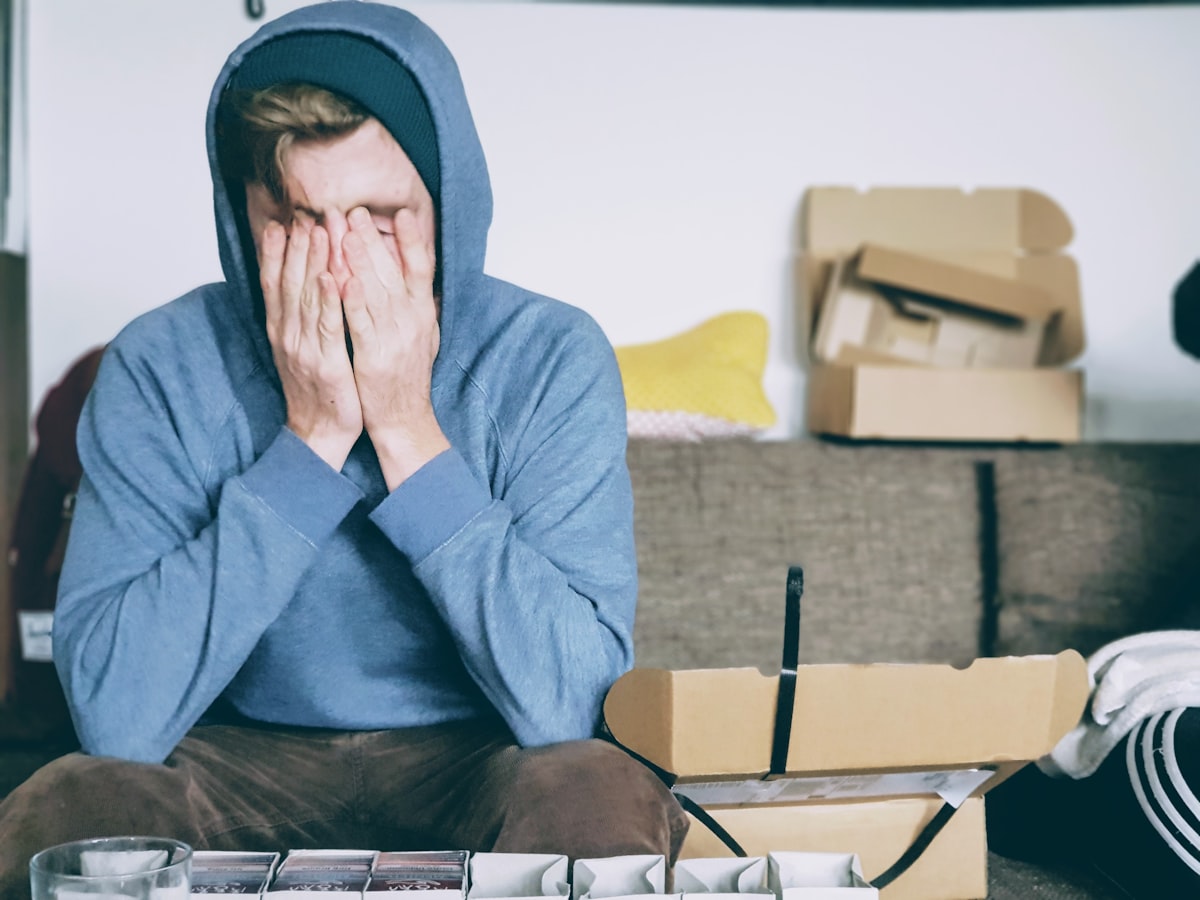
Healing anxious attachment requires consistent practice of tolerating uncertainty in close relationships rather than seeking reassurance to reduce it, combined with direct work on the core belief that your worthiness of love is conditional on your partner’s behavior toward you. The goal is not becoming someone who doesn’t need connection. It is becoming someone who can hold their own security rather than depending on a partner to provide it continuously.
Anxious attachment is not a character flaw. It is an adaptive response to early caregiving environments where attunement was inconsistent, unpredictable, or available only under certain conditions. The person who developed anxious attachment learned exactly what their environment required: stay hypervigilant to the caregiver’s state, seek proximity aggressively when threatened with loss, and never fully relax into security because it might be taken away.
What follows is a specific, evidence-based framework for healing anxious attachment both when you’re in a relationship and when you’re single.
What Anxious Attachment Actually Is
Anxious attachment is one of the insecure attachment styles first identified by Mary Ainsworth in her 1978 Strange Situation research and subsequently mapped into adult relationship patterns by researchers Cindy Hazan and Phillip Shaver in their landmark 1987 study published in the Journal of Personality and Social Psychology. People with anxious attachment have a negative model of themselves (low self-worth in the relationship context) and a positive model of their partner (the partner is seen as desirable and capable of providing security), which creates a fundamental imbalance that drives hypervigilance and pursuit.
Approximately 20% of the adult population has an anxious attachment style according to meta-analyses of attachment distribution research. The neurological signature of anxious attachment includes a hyperactivated threat-detection system in relational contexts, meaning the brain scans continuously for signs of withdrawal or rejection and responds to ambiguous signals with escalated anxiety rather than with a default assumption of safety.
In practical terms, anxious attachment in relationships looks like: checking whether a partner has read your message; interpreting a short reply as a sign of withdrawing; needing more reassurance than most partners are equipped to provide; feeling intense anxiety during any period of disconnection; and the consistent inability to self-soothe during relational uncertainty without external input from the partner.
The Anxious Attachment Activation Cycle
Understanding the cycle that anxious attachment creates is essential before any healing intervention can work. The cycle begins with a trigger, real or perceived distance from the partner. Distance activates the attachment system’s alarm, which produces anxiety. The anxiety generates protest behaviors: messages, calls, emotional expressions designed to restore proximity and reduce the anxiety. If the partner responds, temporary relief follows. If the partner doesn’t respond immediately or responds with further distance, the anxiety escalates into preoccupation that can be all-consuming.
The problem is that this cycle trains partners to respond in ways that confirm the anxious person’s fears. Partners who feel overwhelmed by the demands of the cycle begin to create more distance, which triggers more protest behavior, which produces more distance. This is the foundation of the anxious-avoidant trap, one of the most common and most painful relationship patterns in clinical practice.
Healing requires interrupting this cycle at the anxiety stage, before protest behaviors activate, which is where the specific skill-building work occurs.
How to Heal Anxious Attachment When You’re in a Relationship
Healing anxious attachment inside a relationship is harder than healing it when you’re single because the triggers are live and frequent. Every interaction with your partner has the potential to activate the system. This is also an opportunity, because it provides real-time practice material.
The first and most impactful skill to develop is the capacity for self-soothing during the triggered state. This is not the same as suppressing the anxiety. It means having a reliable set of practices that regulate your nervous system without requiring input from your partner: physical movement, breathing practices that activate the parasympathetic system (specifically longer exhales, which activate the vagus nerve), cold water on the face, or any sensory experience that shifts the physiological state. Therapist Deb Dana, building on Dr. Stephen Porges’ Polyvagal Theory, has documented specific somatic regulation techniques that produce measurable shifts in nervous system state in five to ten minutes.
The second skill is the pause before reaching out. When you feel the urge to send the “are we okay?” message, to call a third time, or to escalate communication to restore proximity, building a deliberate pause of 20 to 30 minutes produces two valuable outcomes. It confirms that you can survive the uncertainty for a defined period, which builds self-efficacy. It also often allows the anxiety to peak and naturally reduce without the protest behavior, which is the definition of tolerating uncertainty rather than escaping it.
The third element is direct communication about the pattern itself. An honest conversation with a partner about your attachment style, framed as your work to do rather than as a demand for specific behaviors, is one of the most effective things you can do. “I have anxious attachment and I’m working on it. When you go quiet for a few hours, I feel anxious. I’m not asking you to always respond immediately, I’m just naming this so we can talk about it” is a different conversation than “why don’t you ever respond to my messages?” The former is self-aware and invites connection. The latter is the protest behavior in a slightly more articulate form.
How to Heal Anxious Attachment When You’re Single
The period between relationships is the highest-leverage time for anxious attachment healing because the triggers are lower-intensity and you have more cognitive bandwidth for deliberate practice. The single period is often experienced by anxiously attached people as acutely uncomfortable, which is itself data: if being without a partner feels intolerable rather than merely less preferable, your sense of security is entirely externally located. That external location is what needs to shift.
Building internal security means developing what attachment researcher Dr. Mario Mikulincer calls self-compassion as a security base. Research by Dr. Kristin Neff at the University of Texas shows that self-compassion practices, specifically treating yourself with the same care you’d offer a close friend when you’re struggling, directly reduce anxious attachment activation in relational contexts. This finding has replicated across multiple studies. It’s not a soft insight, it’s a specific mechanism: when your sense of worth is located in your relationship with yourself rather than exclusively in others’ responses to you, the relational trigger loses some of its power.
Therapy, specifically Emotionally Focused Therapy (EFT) as developed by Dr. Sue Johnson, has the strongest evidence base for restructuring attachment patterns. A 2019 meta-analysis in Psychotherapy Research found that EFT produced significant and lasting changes in attachment anxiety across a range of populations. EFT works by helping you access and process the core attachment fears (not being worthy of love, not being able to trust that love will stay) rather than managing the behavioral symptoms at the surface level.
The Role of the Right Partner in Anxious Attachment Healing
Partner selection matters enormously for anxious attachment recovery. The anxious attachment system is reliably activated by avoidant partners, and the two styles are mutually reinforcing in ways that make genuine healing inside the relationship extremely difficult unless both people are actively working on their patterns simultaneously.
A secure partner, someone who can tolerate your anxiety without either withdrawing or becoming enmeshed in it, who provides consistent and non-conditional reassurance, and who can hold the relationship as safe even during conflict, functions as what John Bowlby called a secure base and is genuinely healing over time. Research from Mario Mikulincer and Phillip Shaver published in 2016 shows that sustained exposure to a secure partner’s responses can actually shift attachment orientation over a 2 to 4 year period.
This does not mean you should look for someone to be your therapist. It means that partner selection with awareness of attachment style, rather than selecting based purely on chemistry (which often reflects attachment activation rather than genuine compatibility), is one of the highest-impact decisions anxiously attached people can make. If you’re evaluating what makes a genuine partnership versus an activated attachment loop, the distinction between chemistry and security is central.
Specific Skills That Reduce Anxious Attachment Over Time
Developing what therapists call a secure inner attachment figure is a concrete practice, not a concept. It involves, over time, identifying what an ideally responsive, caring figure would say to you when you’re triggered (some people use a real person from their history; others construct a composite), and deliberately accessing that perspective when the anxiety system activates. This is not a trick. It is a practice that builds new neural pathways that compete with the anxious attachment pathway, and the research on its efficacy in clinical populations is solid.
Journaling specifically about your early attachment experiences, not as a way to blame or re-traumatize, but as a way to develop a coherent narrative of where the pattern came from and why it made sense at the time, also has measurable effects on attachment security. Mary Main’s research on the Adult Attachment Interview at UC Berkeley found that the strongest predictor of secure attachment in adults is not whether they had a safe childhood, it is whether they have developed a coherent, integrated narrative of whatever childhood they had. Narrative coherence produces earned security.
Frequently Asked Questions
Can anxious attachment fully heal, or just be managed?
Research supports the possibility of genuine shift in attachment orientation, not just management of symptoms. Studies by Mikulincer and Shaver found that approximately 30% of people who initially measured as anxiously attached shifted to secure attachment over a 5-year period, with the strongest predictors being therapeutic work, sustained experience with a secure partner, and deliberate self-compassion practice. Full healing is achievable, but it takes years, not months, and requires active work rather than passive experience.
Why do anxiously attached people keep choosing avoidant partners?
The anxious-avoidant pairing is so common because the avoidant partner’s partial availability activates the anxious attachment system in precisely the way it was conditioned in childhood. Inconsistency of availability, not consistent unavailability, is what produces the most powerful attachment response in anxiously attached people. A consistently available, secure partner can initially feel less compelling because they don’t activate the chase. The felt intensity of the anxious-avoidant dynamic is often mistaken for depth of connection when it is actually hyperactivation of the attachment alarm.
Does anxious attachment make you a bad partner?
Anxious attachment makes you a more difficult partner in specific ways, particularly around reassurance needs, protest behaviors, and the tendency to interpret ambiguity negatively. It does not make you a bad person or incapable of good relationship. Many anxiously attached people are also deeply empathic, emotionally aware, and highly committed precisely because they take relational connection seriously. The goal is to keep those strengths while reducing the behaviors that exhaust partners and prevent genuine intimacy.
How long does anxious attachment healing take?
Meaningful reduction in anxious attachment activation, the kind you notice in daily life, typically begins to appear within 6 to 12 months of consistent therapeutic work and deliberate practice. The deeper shift in attachment orientation, measurable on standardized attachment scales, typically occurs over 2 to 5 years of sustained engagement with the work. Healing is not a destination you arrive at, it is a direction you consistently travel in.
Is it possible to heal anxious attachment without therapy?
Some people make meaningful progress without formal therapy through a combination of structured self-study, consistent self-compassion practice, mindfulness-based approaches, and sustained experience with a secure partner. However, the core fear structures that drive anxious attachment, the beliefs that you are not inherently lovable and that love will always be withdrawn, typically require the specific relational experience of a therapeutic relationship to restructure. Therapy is not the only path, but it is consistently the most efficient one.
About the Author