
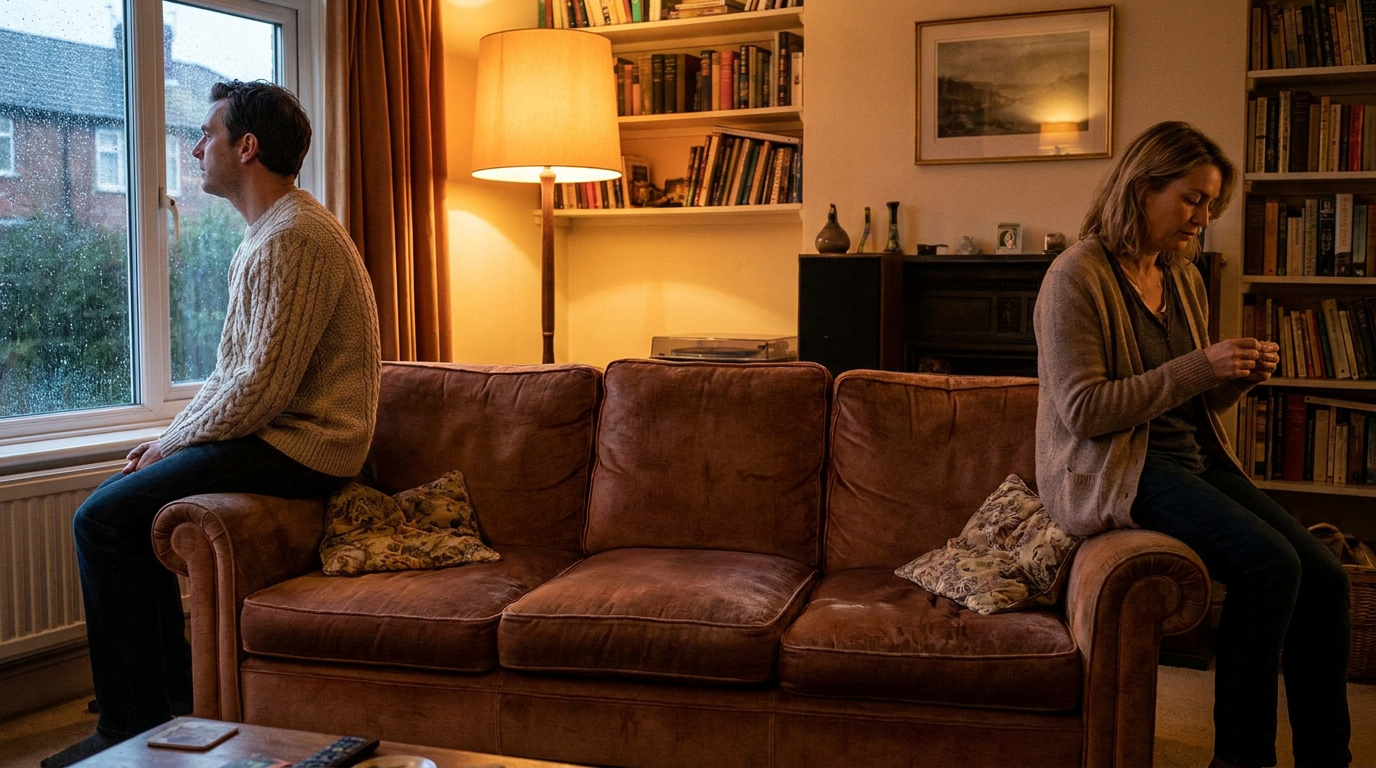
If your partner sits three feet away and still feels a thousand miles gone, you are watching emotional withdrawal, not a communication glitch. Physical closeness with zero engagement usually means one of you has stopped feeling safe enough to stay present. Nothing “happened,” yet the room feels empty anyway.
Being ignored while physically together often hurts worse than being ignored by text, since there is no distance to blame it on. You start doubting your own read of the room, which is exhausting on top of feeling shut out.
By the end of this, you will know what usually drives same-room withdrawal, how it differs from someone just being tired, and what actually helps you bring it up.
What It Usually Means When a Partner Goes Quiet Beside You
Most of the time, silence in shared space is a nervous system response, not a punishment. Some people freeze under stress instead of raising their voice. Psychologists call this stonewalling: withdrawing, going flat, or leaving a conversation without leaving the room.
It often shows up after conflict avoidance builds up over weeks. Your partner may not even register that they have gone quiet. They just know engaging feels riskier than shutting down, so the body picks silence.
Stonewalling Versus Just Being Distracted
Not every quiet evening is a red flag. A partner scrolling their phone after a brutal work day is tired, not withdrawn. The difference is pattern and response.
Distraction lifts when you speak up. Stonewalling does not. A blank look, a shrug, or a delayed one-word answer more than once a week is closer to a shutdown than a slow evening. The same pattern shows up in couples where one partner is always tense or irritated for no clear reason, since simmering resentment and silent withdrawal often travel together.
What Usually Triggers the Withdrawal
Three triggers show up again and again in couples counseling literature: unresolved conflict neither person wants to reopen, feeling criticized without a clear way to respond, and simple burnout from work or parenting that leaves nothing left for connection.
None of these make the silence acceptable forever. But knowing the trigger changes how you approach it. A partner burned out from work needs rest and a lighter entry point. A partner avoiding an old argument needs to feel like reopening it will not turn into round two of the same fight.
How to Bring It Up Without Starting a Fight
Lead with observation, not accusation. “I’ve noticed you go quiet when we’re both home lately” lands differently than “why do you always ignore me.” The first invites explanation. The second invites defense.
Pick a low-stakes moment, not the middle of the silence itself. Ask one direct question and then actually wait for the answer instead of filling the pause. If the pattern started suddenly rather than gradually, it is worth also ruling out what changed that week, since a specific event tends to have a specific fix. This pattern shows real overlap with couples dealing with a partner who has gone cold rather than just quiet, and the same is true for the more classic version of this problem covered in why a boyfriend goes silent and stops responding.
Common Questions
Is it normal for couples to sit in silence sometimes? Yes. Comfortable silence between people who feel connected looks relaxed, not tense. The concerning version comes with avoided eye contact, short answers, or visible irritation when you try to talk.
Should I confront my partner the moment it happens? Usually not. Stonewalling tends to get worse under immediate pressure. Naming the pattern later, once things are calm, gets further than pushing in the moment.
Does this always mean the relationship is in trouble? Not automatically. Occasional withdrawal after a hard day is common. Withdrawal that repeats for weeks without any acknowledgment is the part worth addressing directly, ideally with both people willing to talk it through.
About the Author