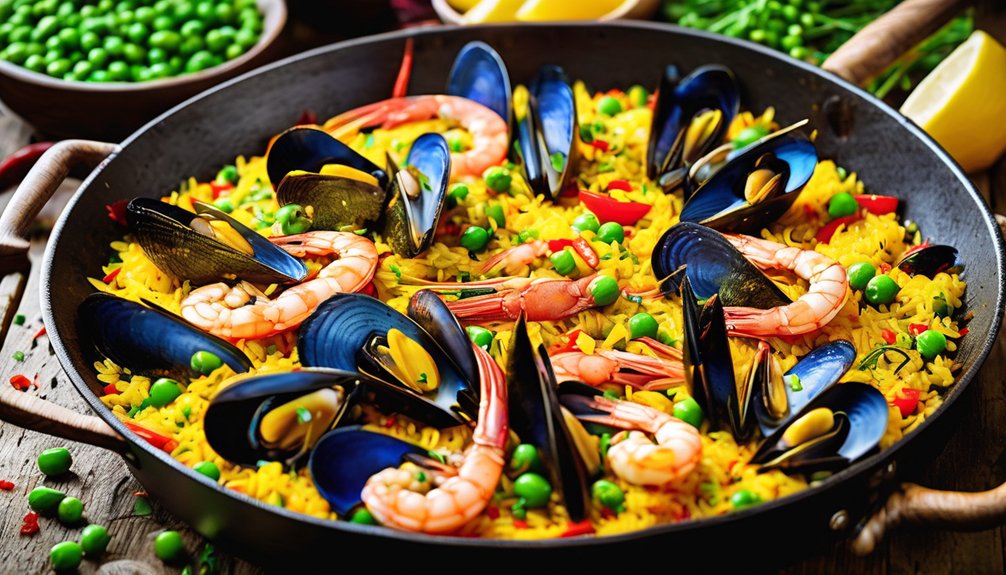
To make authentic paella, start with key ingredients like short-grain rice, saffron, and fresh seafood or meats, which provide distinctive flavors. Follow a precise cooking process: sauté proteins, add rice and broth without stirring, and monitor heat carefully to develop the socarrat, the prized crispy crust. Mastering heat control and ingredient layering guarantees balanced taste and texture. Understanding these fundamentals prepares you to explore variations and perfect every step in your paella preparation.
Essential Ingredients and Their Roles
Although paella recipes can vary widely, certain essential ingredients play specific roles that define the dish’s character.
You’ll find that choosing the right rice varieties, such as Bomba or Calasparra, is vital because they absorb liquid well without becoming mushy.
Seafood options also shape the flavor profile, with ingredients like shrimp, mussels, and clams contributing distinct tastes and textures.
Each component works together to create paella’s signature balance.
Understanding these essentials lets you explore variations confidently while maintaining the dish’s authenticity.
This knowledge provides the freedom to customize paella while respecting its traditional foundation.
Step-by-Step Cooking Process
When you begin the paella cooking process, it’s important to prepare each ingredient carefully and follow the steps in order to guarantee proper texture and flavor development.
Start by sautéing your chosen proteins, then add vegetables and rice, allowing flavors to meld. Incorporate stock gradually, avoiding stirring to develop the prized socarrat.
Remember, cooking techniques may vary, and ingredient substitutions can accommodate dietary preferences without compromising taste. Focus on the sequence to control moisture and heat distribution.
Consider these points to enhance your experience:
- Embrace flexibility in ingredient choices
- Maintain consistent heat for even cooking
- Layer flavors intentionally for depth and balance
Tips for Perfecting the Socarrat
Mastering the socarrat requires careful attention to heat management and timing during the final cooking stage.
To create the perfect crispy bottom crust, use even, moderate heat to avoid burning while encouraging caramelization. Choose short-grain rice varieties, as their starch content supports socarrat formation better.
Avoid stirring once the broth is added, allowing the rice to cook undisturbed. Employ socarrat techniques such as gently shaking the pan to check if the crust is forming without scraping it.
With precise rice selection and controlled heat, you can achieve the characteristic socarrat that defines authentic paella.
Frequently Asked Questions
What Is the History Behind Paella?
You’ll find paella origins in Valencia, Spain, where farmers cooked over open fires using traditional ingredients like rice, saffron, and local meats. It’s a dish born from freedom, creativity, and sharing simple, bold flavors.
Can Paella Be Made Vegetarian or Vegan?
Yes, you can definitely make paella with vegetarian ingredients like artichokes, bell peppers, and green beans. Swap traditional broth for vegan alternatives like vegetable stock, and you’ll enjoy a vibrant, free-spirited vegan paella.
What Are the Best Wines to Pair With Paella?
You’ll want crisp white wines like Albariño or Verdejo; their bright acidity matches paella’s rich, saffron flavor profiles. For bolder tastes, try a light red like Tempranillo. Let your palate roam free!
How Should Leftover Paella Be Stored and Reheated?
When storing paella, cool it quickly, then seal it in an airtight container and refrigerate. For reheating paella, gently warm it in a pan with a splash of water or broth to keep it moist and flavorful.
What Regional Variations of Paella Exist in Spain?
You’ll find Valencian paella, packed with rabbit and pulled chicken recipe that stays juicy, and seafood paella bursting with fresh shellfish. Each region lets you savor freedom in flavors, so feel free to explore and enjoy every delicious twist.
About the Author